
Seller guide
What Drives Bus Plug Prices
Five factors, in roughly the order of how much they move the number.
- Paid before removal
- No testing required
- Dismantling and rigging on us
- Freight always covered
Request a Quote
Have equipment to sell while you read? Send a nameplate photo for a same-day number.
First: is the line still in production?
This is the dominant factor and it surprises most sellers. When a manufacturer discontinues a busway line, every facility still running it loses access to new plugs permanently. Their options become the used market or replacing the entire distribution system, which is an order of magnitude more expensive. Demand for used units on that line therefore does not decay with age; it hardens.
The consequence is counter-intuitive: older equipment is frequently worth more than newer equipment. A plug for a line still in the catalog competes with a new unit and is priced accordingly. A plug for a line discontinued decades ago competes with nothing at all.
Second: the size of the installed base
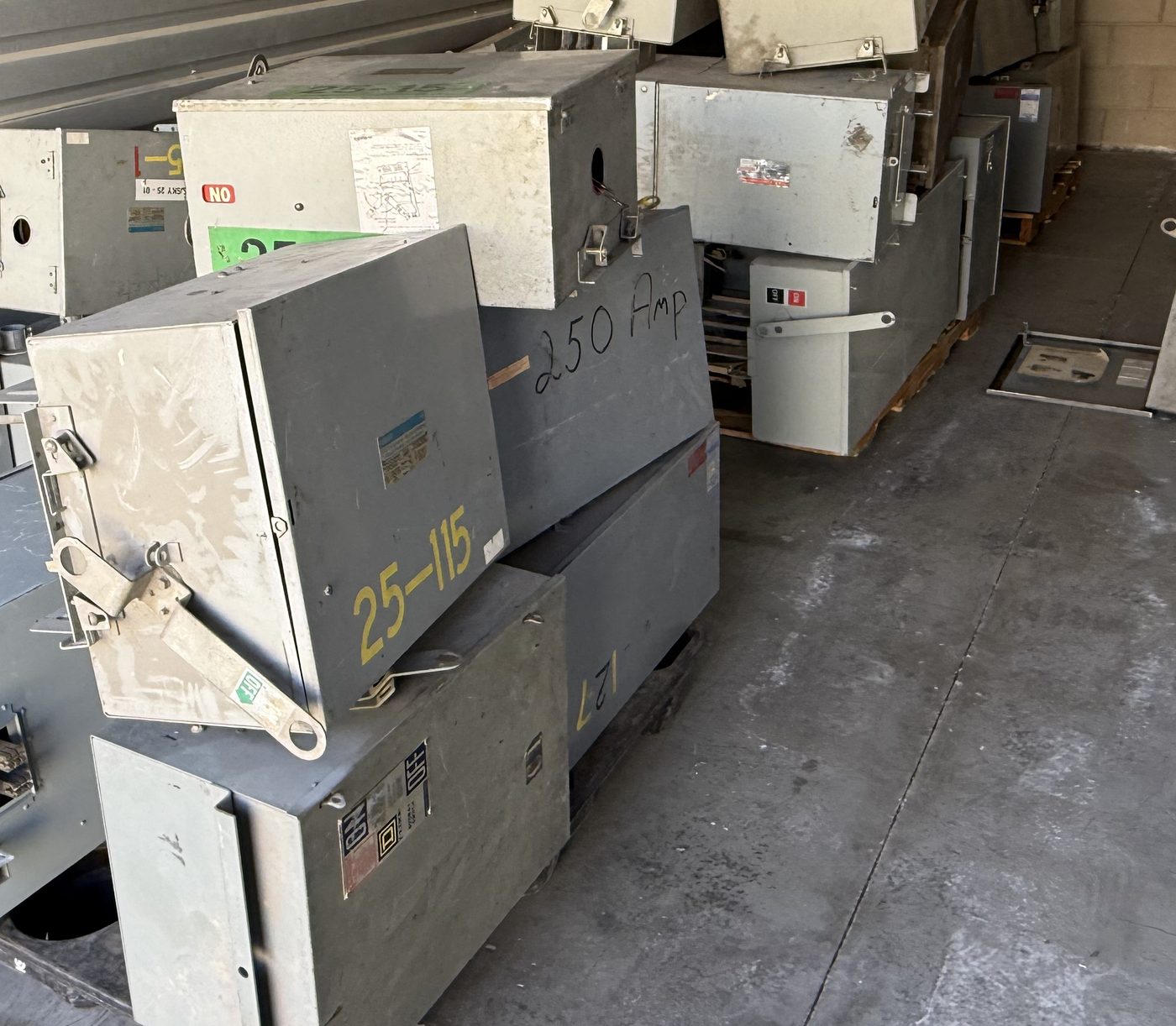
A discontinued line only has value if somebody is still running it. Lines that sold in volume across many industries leave behind a large population of facilities that need spares for years. Lines that sold thinly leave almost nobody, and units for them are worth close to metal regardless of condition.
This is why two units with identical amp ratings and identical physical condition can be quoted very differently, and why the nameplate matters more than anything else you can tell us over the phone.
Third: amp rating and frame size
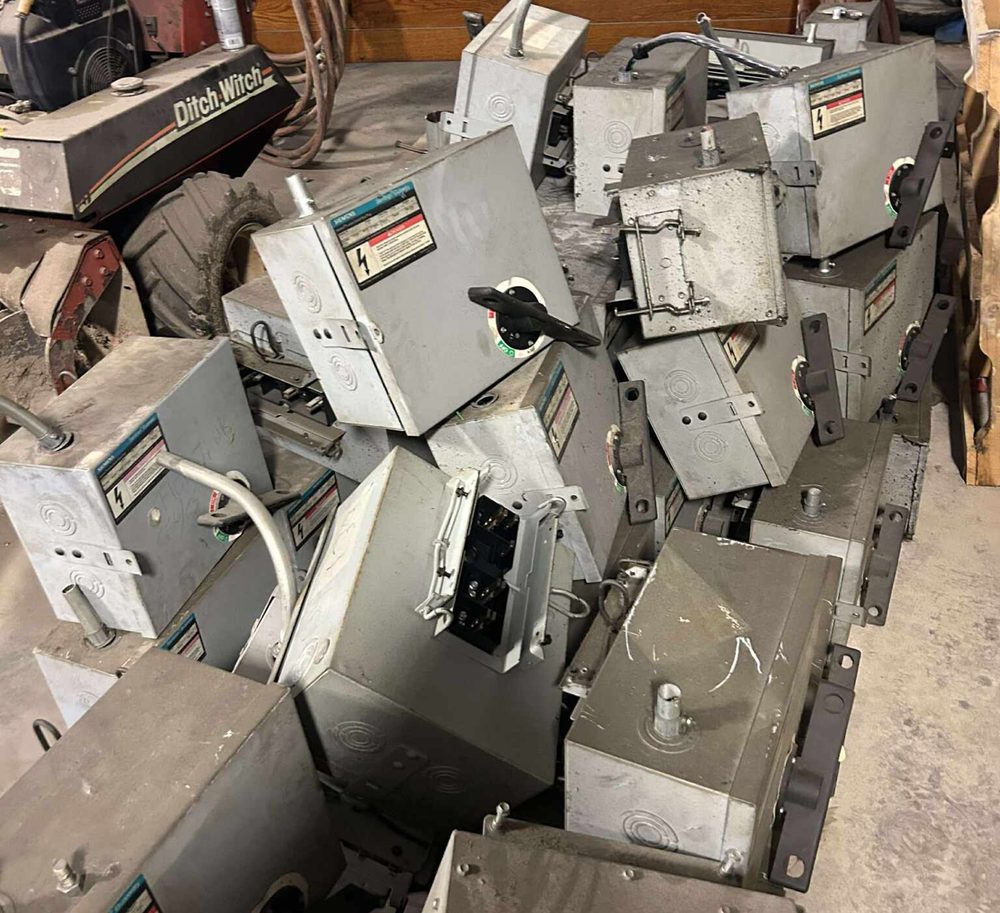
Within a given line, common ratings move faster than unusual ones. The middle of the range covers the majority of real loads in a plant, so those units turn over steadily. Very small frames are cheap to work around and tend to be worth less individually. Very large units are worth more per piece but sell more slowly, because fewer facilities need them.
Larger ratings also carry more copper or aluminum, which raises the floor under the price even when the resale market for that particular line is thin.
Fourth: physical condition, narrowly defined
Condition matters, but not in the way sellers usually assume. Surface dust, faded paint, a scuffed cover and decades of grime are cosmetic and affect the number very little. What matters is mechanical: does the handle throw, does the interlock engage, are the stabs clean rather than burned, is the case square.
The one condition problem that genuinely destroys value is water. A unit that has had standing water inside it, or that has sat outdoors uncovered through seasons, is usually a recovery purchase rather than a resale one. If your equipment is outside, the most valuable thing you can do today is get it under cover.
Fifth: quantity, and whether the duct comes too
Sending a crew and a truck costs the same whether they collect six units or sixty, so quantity improves the per-unit number materially. A full run with its matching plugs is the strongest position a seller can be in, because it can be re-installed as a system rather than parted out.
This is also why we would rather quote a whole electrical room than a single category. More scope means better economics on our side, and we pass a meaningful share of that back in the offer.
What does not affect the price much
Age on its own. Cosmetic condition. Whether it is clean. Whether you can tell us what it is. Whether it has been tested, which we never ask for in the first place.
Request a Quote
A nameplate photo gets the fastest number.
Other seller guides
Everything worth knowing before you sell
Funds change hands before a single section leaves your property. There is no consignment and no waiting on a downstream resale.
Our own crew takes the run down. You are not sourcing riggers, renting lifts or chasing a carrier who has never handled busway before.
You are never asked to test, megger or certify anything. We grade from physical condition and the nameplate. That is the entire process.
Fusible plugs, breaker units, bus duct, tap boxes, panelboards and starters all on one job is the normal case rather than the exception.
What Drives Bus Plug Prices: quick answers
Straight answers
Can you give me a per-unit price over the phone?
Only as a range without seeing the nameplate, because the line it fits swings the number too much to guess responsibly.
Is copper bus worth more than aluminum?
Yes on metal content, though on a discontinued line the resale value can dwarf that difference entirely.
Do damaged units have any value?
Yes, as recovery purchases priced on metal content, and we take them alongside the good units.
Questions about your own equipment?
Call or text photos and we will tell you what you have.
Request Your Quote
Anywhere in the United States. No obligation.