
Seller guide
How to Sell Used Bus Plugs
Six steps, in order, with the mistake that costs sellers money at each one.
- Paid before removal
- No testing required
- Dismantling and rigging on us
- Freight always covered
Request a Quote
Have equipment to sell while you read? Send a nameplate photo for a same-day number.
Step 1: photograph the nameplate before anything else
The nameplate is the single most valuable piece of information on a plug-in unit. It carries the manufacturer, the busway line the unit fits, the amp rating, the voltage and usually a catalog number. Those five things together are most of what determines the price, which is why a buyer who has seen the plate can quote in hours while a buyer working from a verbal description cannot.
Get close enough that the small print is legible and shoot straight on rather than at an angle. If there are several different units, photograph each distinct plate rather than assuming they match. Mixed lots are extremely common, and a single high-value unit hiding in a pile of ordinary ones is a situation we run into constantly.
Step 2: if the plate is gone, shoot the housing instead
Missing and unreadable nameplates are normal on older equipment and they are not a dead end. The physical design of the unit identifies the line to anyone who handles this equipment regularly. Case shape, latch style, hinge arrangement, handle design and the configuration of the stabs on the back are all distinctive between manufacturers, and often between generations of the same manufacturer's line.
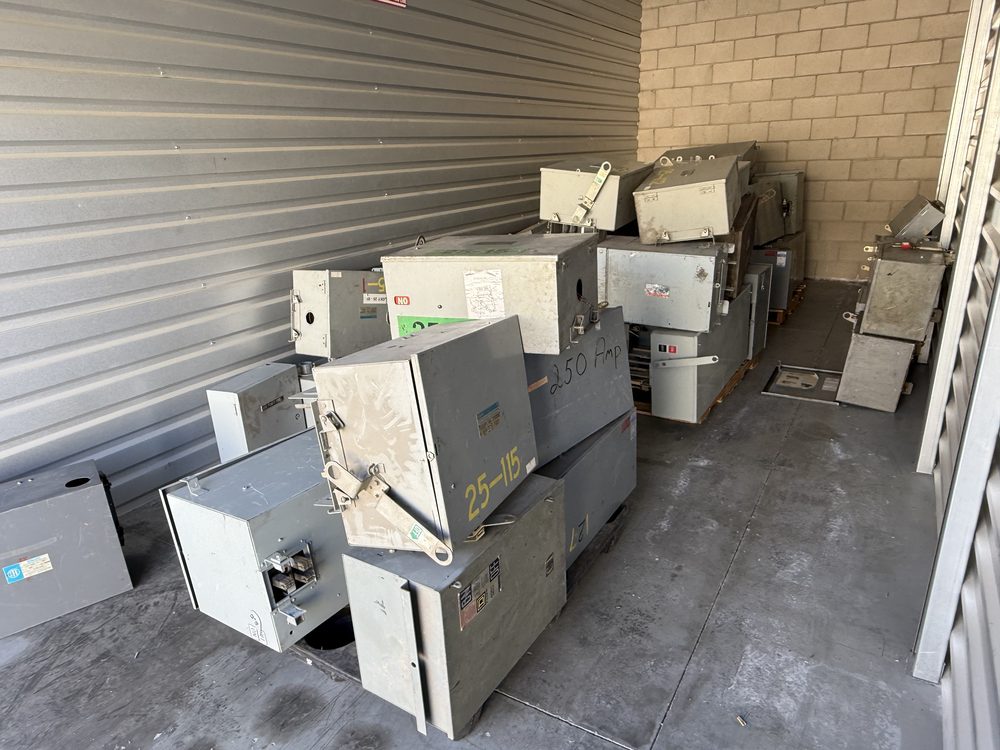
Photograph the unit from the front, from the side, and from the back if it is already off the busway so the stabs are visible. Include anything hand-written on the cover. Plant electricians have been marking amps, circuit numbers and equipment names on these covers for decades, and that writing frequently tells us more than the missing plate would have.
Step 3: count what you have and photograph the run
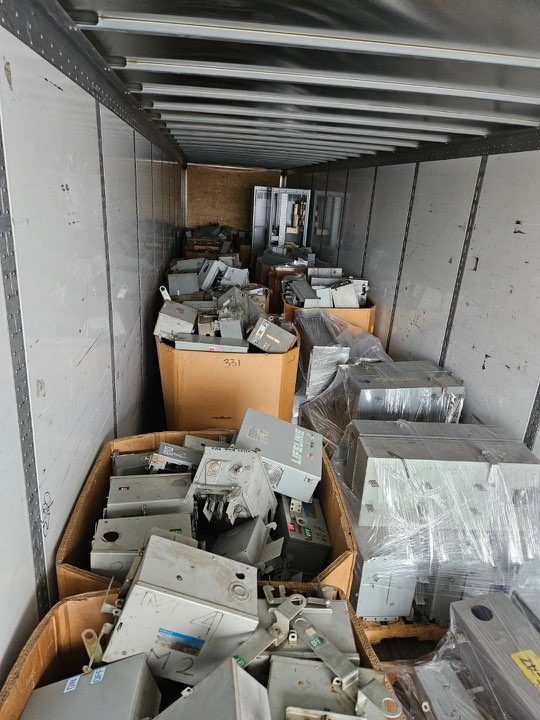
Quantity changes the economics, because sending a crew and a truck costs the same whether they collect four units or forty. A wide shot showing the whole pile or the whole overhead run lets us price the job rather than the pieces, and job pricing is almost always better for the seller.
If the equipment is still installed, the photograph that helps us most is the one showing the ceiling height, what sits directly underneath the run, and the path from there to a door or a dock. That determines whether the removal is a straightforward lift job or a sequencing problem, and we would rather know before quoting than discover it on the day.
Step 4: do not do the removal yourself
This is the most expensive mistake available to a seller. Paying an electrical contractor to take the busway down before you have talked to a buyer means you have absorbed the single largest cost in the transaction for no reason, because a buyer who brings their own crew has that cost priced into their offer already.
The second problem is that removal done for disposal looks nothing like removal done for resale. Duct gets cut into convenient lengths, joint hardware gets discarded, and units get dropped. Any of those turns re-usable equipment into metal and takes the resale premium with it.
Step 5: understand what you are actually being quoted
There are two completely different numbers in this market and they are frequently described in similar language. A scrap figure is copper and aluminum weight minus the yard's processing cost. A resale figure is what a plant still running your busway line will pay for a serviceable plug. On a discontinued line the second number can be several multiples of the first.
Ask directly which one you are being offered. Ask whether the buyer resells this equipment or only recovers metal from it. And ask whether the price is firm on arrival, because a quote that gets re-traded when the truck shows up was never really a quote.
Step 6: get the terms in plain language before you agree
Four questions settle it. Who does the dismantling? Who pays for the lift, the rigging and the freight? When exactly does the money change hands relative to the equipment leaving? And will you be asked to test, megger or certify anything? Our answers are: we do, we do, before it leaves, and no.
Request a Quote
A nameplate photo gets the fastest number.
Other seller guides
Everything worth knowing before you sell
Funds change hands before a single section leaves your property. There is no consignment and no waiting on a downstream resale.
Our own crew takes the run down. You are not sourcing riggers, renting lifts or chasing a carrier who has never handled busway before.
You are never asked to test, megger or certify anything. We grade from physical condition and the nameplate. That is the entire process.
Fusible plugs, breaker units, bus duct, tap boxes, panelboards and starters all on one job is the normal case rather than the exception.
How to Sell Used Bus Plugs: quick answers
Straight answers
How long does the whole process take?
Typically same-day for the offer and one to two weeks for the removal, compressed further if you have a hard demolition or shutdown date.
Do I need to be there when your crew works?
Somebody with site access and authority should be reachable, but you do not need to supervise the work or supply any labor.
What if some of the units turn out to be worthless?
We tell you that up front rather than adjusting on arrival, and we still take them as part of the lot so you are not left with a disposal problem.
Questions about your own equipment?
Call or text photos and we will tell you what you have.
Request Your Quote
Anywhere in the United States. No obligation.